- Government Announces New Damage Projections
- Tsunami-Related Deaths Expected to be Highest
- Over 12 Million Evacuees Nationwide
- Economic Impact More Than Twice the National Budget
- Preparedness Is Key to Saving Lives
- Protecting Those Who Need Assistance
- Information Gathering and Sharing Can Be Life or Death
- Now Is the Time to Make Disaster Preparedness Personal
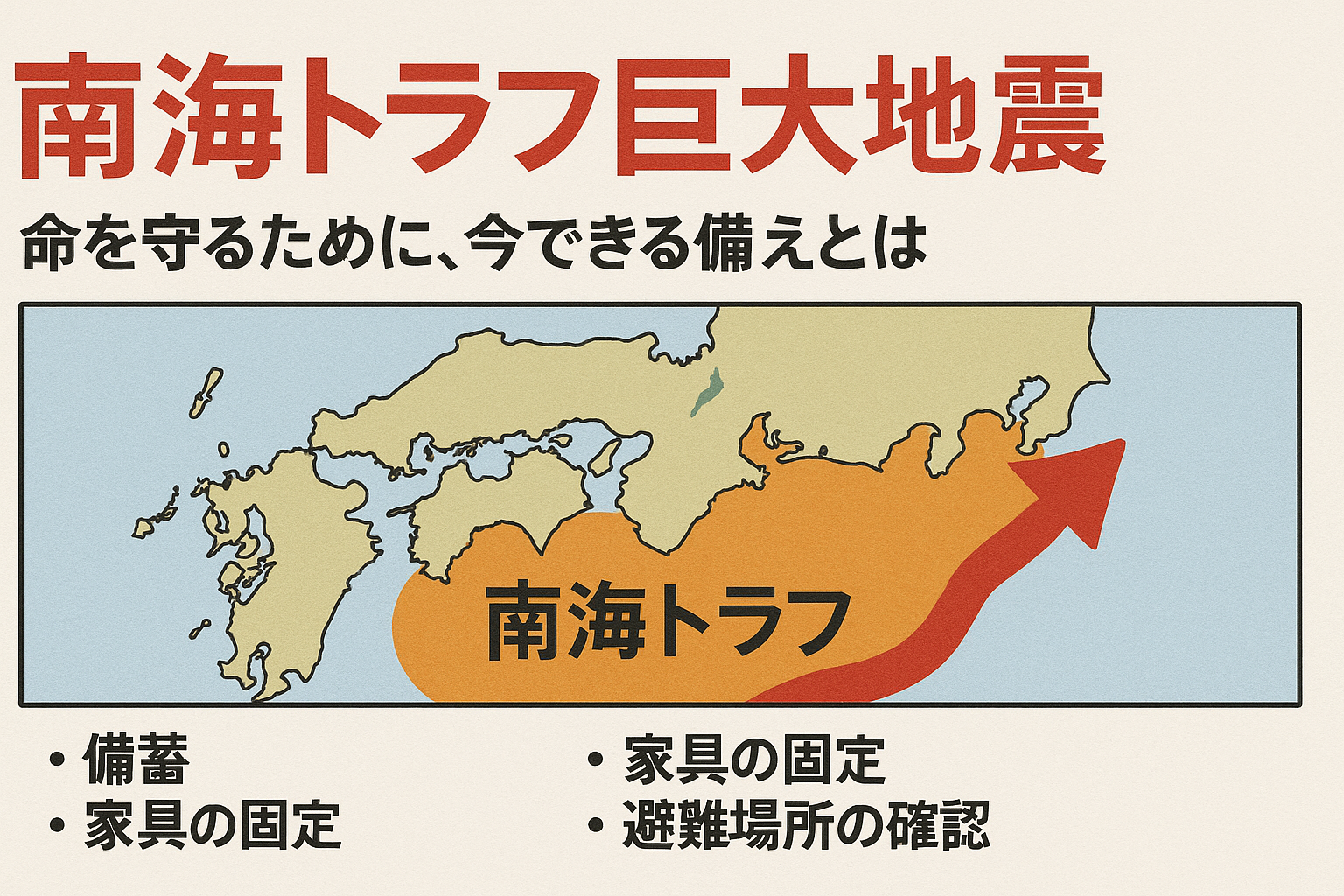
Government Announces New Damage Projections
On March 31, 2025, the government released new damage estimates regarding the Nankai Trough megaquake. This revision aims to provide more realistic projections by incorporating past disaster data and the latest topographical information. As a result, the estimated tsunami inundation area has expanded, and in the worst-case scenario, the number of fatalities could reach approximately 298,000 if evacuation is delayed. This figure represents only a slight decrease from the previous estimate.

Tsunami-Related Deaths Expected to be Highest
Particularly noteworthy is that tsunami-related deaths are projected to be the highest, at around 215,000. This is followed by approximately 73,000 deaths from building collapses and about 9,000 from fires caused by the earthquake. For the first time, the estimate also includes “disaster-related deaths,” indicating that up to 52,000 people could die due to deteriorating health during evacuation life.
Over 12 Million Evacuees Nationwide
The number of evacuees is also projected to be severe. Up to about 12.3 million people may be forced to evacuate within a week after the earthquake, with around 6.5 million expected to live in shelters. The prolonged evacuation is expected to highlight various issues, such as shortages of food and water and strained medical systems.
Economic Impact More Than Twice the National Budget
The economic impact is also enormous. The direct cost of restoring buildings and facilities is estimated to reach up to about 224.9 trillion yen, and when including lost productivity, the total could reach approximately 270.3 trillion yen. This is more than double the national budget and is feared to have a serious impact on the entire Japanese economy.
Preparedness Is Key to Saving Lives
To minimize such damage, daily preparedness is essential. It is important to check tsunami hazard maps and identify evacuation sites and routes near your home and workplace. You should also actually walk the evacuation routes to confirm the time needed and share evacuation plans with family and community members.
Protecting Those Who Need Assistance
During disasters, consideration for those who need support—such as the elderly, people with disabilities, and pregnant women—is indispensable. Communities must establish support systems and prepare for swift responses. Regular communication and building local networks can lead to life-saving actions.
Information Gathering and Sharing Can Be Life or Death
Finally, obtaining accurate information during a disaster is crucial to saving lives. Always check information released by the Japan Meteorological Agency and local governments and take appropriate action. “Tsunami Safe—To Protect Lives from Tsunamis—” will continue to provide the latest information and disaster prevention measures.
Now Is the Time to Make Disaster Preparedness Personal
As seen above, both individual awareness and community cooperation are essential to prepare for the Nankai Trough megaquake. Daily preparedness can protect you and your loved ones when the time comes. Take this opportunity to review your disaster prevention measures and ensure you are fully prepared.
コメント