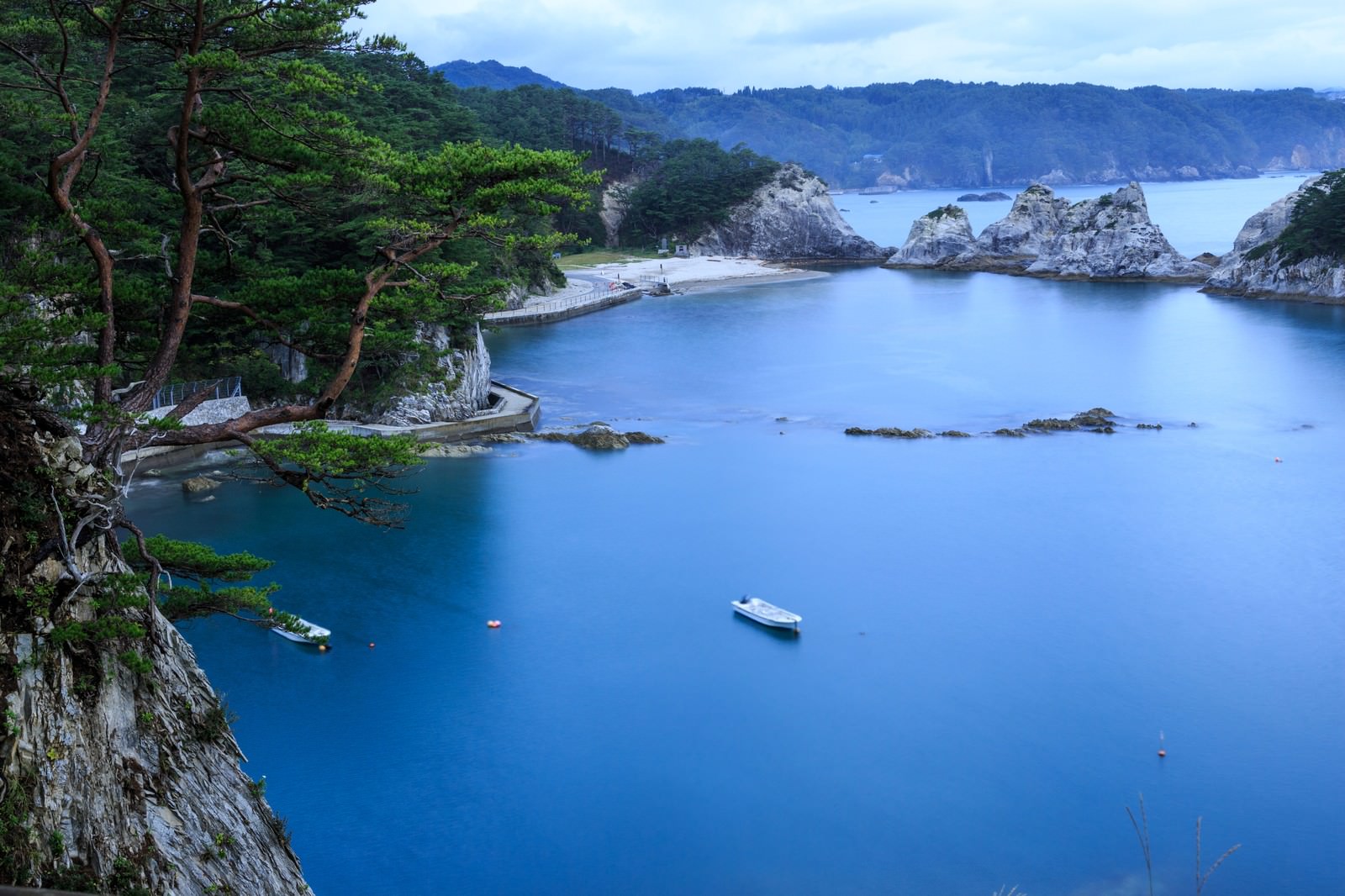
Ria coasts create beautiful landscapes with their intricate topography, but they also have characteristics that can lead to severe tsunami damage. In these areas, tsunami energy tends to concentrate, and wave height amplifies as it moves deeper into the bay, causing devastating impacts on residents and infrastructure. This article presents 10 specific examples of tsunami damage in ria coasts and proposes ways to aim for “a world without tsunami deaths” based on these lessons.
Examples of Tsunami Damage in Ria Coasts:
- Ryori Bay (Ofunato City, Iwate Prefecture)
Recorded an astounding run-up height of 40.1m during the Great East Japan Earthquake. The decreasing cross-sectional area towards the bay’s interior amplified the tsunami height. - Rikuzentakata City (Iwate Prefecture)
Inundation heights of 15.4m near the coast and 11.3m at a point 3.6km inland were recorded. The tsunami penetrated deep inland along the valley. - Onagawa Town (Miyagi Prefecture)
Suffered extensive building damage, including the collapse of six reinforced concrete buildings. The force of the backwash was cited as a factor in building collapses. - Kesennuma City (Miyagi Prefecture)
114 victims were found at sea, highlighting the significant impact of backwash due to the inlet topography. - Minamisanriku Town (Miyagi Prefecture)
Strong backwash occurred due to topographical factors, sweeping many people out to sea. - Ishinomaki City (Miyagi Prefecture)
With 203 casualties, it had one of the highest death tolls in the Sanriku coastal region. The tsunami amplification effect typical of ria topography was confirmed. - Kamaishi City (Iwate Prefecture)
Suffered extensive damage from tsunamis that overtopped evacuation towers and seawalls. The speed of tsunami intrusion into the bay was also high. - Otsuchi Town (Iwate Prefecture)
The tsunami inundation area was extensive, destroying many homes and facilities. - Kuji City (Iwate Prefecture)
Tsunami damage was concentrated due to the narrow valley topography, and delays in resident evacuation were also an issue. - Miyako City (Iwate Prefecture)
The tsunami height increased rapidly in the bay’s interior, resulting in many casualties and infrastructure destruction.
Lessons from Ria Coasts:
Ria coasts experience expanded tsunami damage due to the following characteristics:
- Topographical factors: Intricate valley topography concentrates tsunami energy, amplifying wave height.
- Strength of backwash: Water masses that run up valleys create powerful backwash, causing severe secondary damage.
- Evacuation difficulties: Settlements and urban functions concentrated at the back of inlets make rapid evacuation challenging.
Proposals for a World Without Tsunami Deaths:
- Establish early evacuation systems
Strengthen disaster prevention education and drills to promote rapid evacuation actions immediately after an earthquake. In ria coast areas, instilling an “evacuate immediately” mindset is crucial. - Install seawalls and evacuation towers
Develop multi-layered disaster prevention infrastructure by constructing seawalls, hilltop evacuation facilities, and towers. - Provide real-time information
Improve tsunami warning systems and advance technologies to instantly provide risk levels and evacuation instructions for each area. - Collaborate with local residents
Develop participatory disaster prevention plans to address area-specific challenges and raise disaster awareness throughout the community. - International cooperation
Utilize globally shareable disaster prevention technologies and knowledge to create “zero tsunami casualties” model areas in Japan and abroad.
While ria coasts can pose a life-threatening danger despite their beautiful nature, it is possible to realize “a world without tsunami deaths” through disaster prevention technology and increased public awareness. Achieving this goal requires collaboration between scientific technology and local communities. Let’s take a step towards building a safer society as hope for the future.

コメント